Streaming TV Marketing Strategy: How Brands Use OTT Platforms to Reach New Audiences
- Be on ZTV

- Mar 27
- 5 min read
Not long ago, the choice was simple. You either had the budget for television advertising, or you didn't. Digital advertising made things more accessible but got crowded fast, and the quality of attention it delivered kept declining as competition for it kept increasing.
Streaming landed at the intersection of those two problems and offered something neither had on its own. The premium viewing environment that television always had. The targeting precision and measurement capability digital always had. Together. At budget levels that didn't require a national brand to justify.
That's what a properly built streaming TV marketing strategy is actually built on. Here's what it looks like in practice.
The Audience Is Already There
Streaming viewership has overtaken traditional broadcast and cable in total hours watched. Connected TV devices are in the majority of households. The living room screen, a traditional television owned for decades, is now primarily a streaming territory.
This isn't a trend to get ahead of. The audience is already there. Brands still putting most of their television budget into traditional broadcasts are paying premium prices to reach an audience that keeps shrinking.
The OTT marketing strategy opportunity is about meeting an audience that's already waiting in an environment that offers better targeting, better measurement, and better quality of attention than any previous television model provided.
For a closer look at what's driving this shift and what brands are finding when they get there, this blog on streaming TV advertising benefits covers the specifics worth understanding before building any streaming strategy.
What a Real Streaming Strategy Actually Involves
Audience First, Always
The most consistent mistake in streaming campaigns is starting with the platform rather than the audience. Which streaming service? Which ad format? Which targeting options exist? These are implementation details, and they come second.
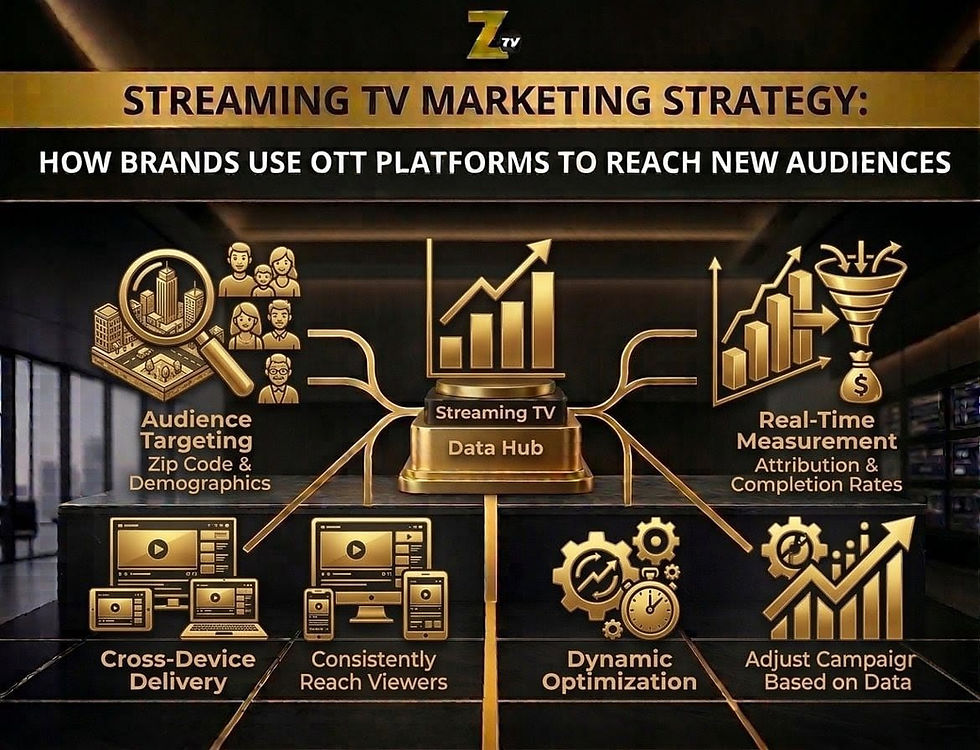
The first question is who specifically you're trying to reach. Streaming platforms have viewer data that broadcast television never had. Geographic location. Household demographics. Viewing behavior. Content preferences. That data is only useful if you know what you're looking for before you start looking.
Brands that define their audience precisely first always get more from the same budget than brands that work backward from platform availability.
Creative That Actually Belongs There
Streaming viewers are there intentionally. They chose what they're watching, they settled in, and they're paying attention. An ad in that environment has an opportunity most formats don't get. A genuinely engaged audience that's actually watching.
Most campaigns don't capitalize on that. They adapt a generic video creative for a streaming placement and wonder why the results don't reflect the premium environment they paid for.
Working with a TV commercial production team that understands how streaming works, specifically the pacing, structure, and message framing that earns attention from an engaged viewer, makes a measurable difference. This is usually where campaigns live or die, not the targeting and not the platform.
Showing Up Consistently
Brand authority doesn't come from one campaign. It comes from consistent presence in a premium context over time. A viewer who encounters your brand in streaming multiple times over months builds familiarity and credibility that compounds in ways a six-week burst and then silence simply doesn't produce.
The brands treating streaming as an ongoing channel rather than a campaign vehicle are the ones whose other marketing channels quietly start performing better twelve months later. The streaming presence created the familiarity. The familiarity made everything else easier.
Streaming is a targeting problem, a creative problem, and a consistency problem. Brands that solve all three build something that compounds in ways competitors find difficult to replicate quickly. That's the work Content creator monetization exists to help brands do.
How the Three Main Advertising Environments Compare
This is the comparison that helps brands understand where streaming fits and why it fills a gap neither traditional TV nor standard digital covers on its own.
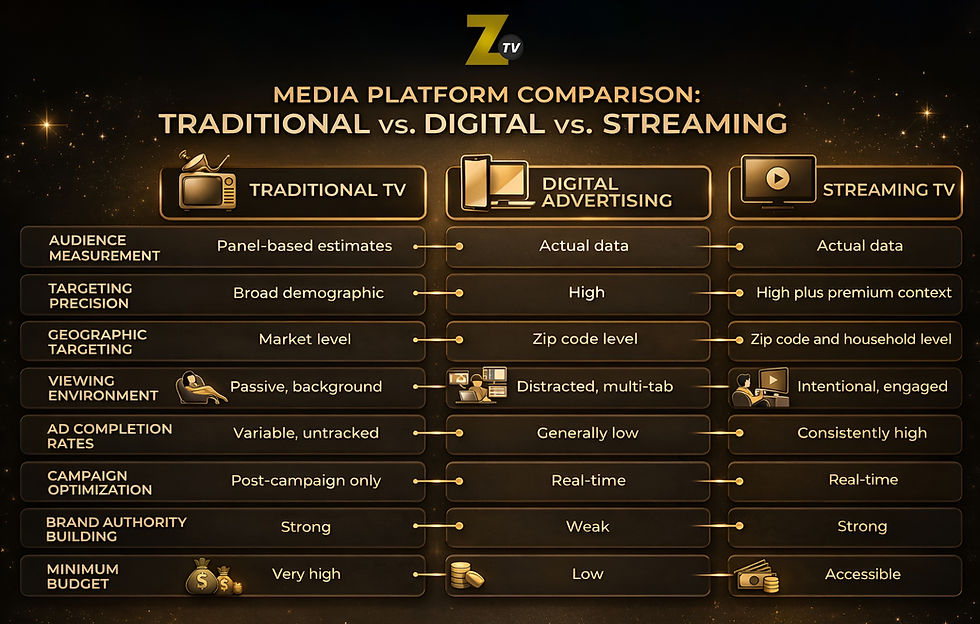
Streaming occupies the space that neither column owned before. Premium brand-building environment with the measurement and targeting precision of digital. That combination is why brands that discover it rarely go back to treating traditional broadcast as the default.
Targeting That Changes the Budget Math
This is where the connected TV advertising comparison with traditional broadcast becomes most significant.
Traditional TV bought a time slot and reached whoever was watching. Some were the right audience. Most weren't. The brand paid for all of them with no way to change that.
Streaming targets specifically. Geographic location down to zip code and household level. Viewing behavior. Household demographics. Content preferences. A smaller budget reaches a higher proportion of relevant viewers rather than being diluted across everyone watching a particular channel at a particular time.
Working with an OTT platform provider partner that knows how to navigate audience data across multiple streaming environments is the difference between targeting as a checkbox and targeting as a genuine competitive advantage.
Measurement That Makes Optimization Real
Traditional TV required faith. Panel estimates. Post-campaign reports telling you what might have happened.
Streaming generates real data in real time. Impressions served. Completion rates. Attribution connecting ad exposure to downstream behavior. Brands can see what's working during a campaign and adjust rather than learning from one campaign what to do better in the next.
For brands that have struggled to make the ROI case for TV advertising, this is often what makes the streaming argument finally land.
And if you're a smaller brand wondering whether this is relevant at your scale, this blog on streaming TV marketing builds brand authority, making the case for why streaming often works better at smaller budgets than most people expect.
How Streaming Fits With Everything Else
The brand familiarity built through consistent streaming presence makes every other marketing channel work harder. Someone who has seen your brand multiple times in a premium streaming environment is more likely to click your search ad, respond to your email, or choose you over a competitor when they encounter you elsewhere.
Working with a digital media agency that understands how streaming fits within a broader marketing ecosystem rather than treating it as a standalone experiment produces significantly better outcomes.
If you're still comparing streaming to traditional TV before making budget decisions, this blog on streaming TV vs traditional TV advertising covers that honestly across targeting, measurement, and audience quality.
FAQs
What is a streaming TV marketing strategy?
A planned approach to reaching target audiences through OTT and connected TV platforms. It starts with defining the audience specifically, builds creative for the streaming viewing environment, selects platforms that reach the right people efficiently, and uses real-time data to optimize during campaigns rather than only after them.
How do brands use OTT platforms to reach new audiences?
By using the viewer data streaming platforms have access to, viewing behavior, household demographics, geographic location, and content preferences, to serve ads specifically to the viewer profiles most likely to be relevant customers. This precision eliminates most of the wastage that made traditional broadcast advertising so inefficient for brands with defined target audiences.
What makes a streaming TV campaign effective?
Creative built specifically for an engaged, intentional viewer. Targeting is precise enough to reach relevant viewers specifically, rather than broad approximations. Consistent presence over time rather than isolated bursts. Real-time measurement is used to optimize during campaigns rather than only being analyzed afterward.
How does connected TV compare to traditional TV advertising?
Better targeting, actual impression data rather than estimates, geographic precision down to the household level, lower minimum budgets, and real-time optimization. Traditional TV retains advantages for maximum mass market reach and live events, but for most brands with defined audiences and accountable budgets, connected TV delivers better results per dollar.
How much does streaming TV advertising cost?
Entry points are substantially lower than traditional broadcast minimums. Efficient targeting means smaller budgets reach higher proportions of relevant viewers rather than being spread


Comments