Video Trust Building: Why Brands That Show Up on Screen Build Faster Trust

Updated: May 14

There's a reason you trust some brands almost immediately, and others feel like a gamble even after reading everything on their website.
It's not always the product. It's not even always the reviews. A lot of the time, it comes down to whether you've seen them. Not just a logo or a tagline, but actual people, actual voices, actual presence on screen. Something about seeing a brand in motion, hearing a real voice explain something clearly, watching someone demonstrate what they do, that shifts something in the brain. The skepticism softens. The trust starts to build.
This is the core idea behind video trust building, and it's why brands that invest in screen presence consistently outpace those that rely on text and static content alone. It's not a trend. It's rooted in how people actually process credibility.
This blog breaks down why video works the way it does, what it means for your brand strategy, and how showing up on screen can be the single most effective thing you do to earn faster, deeper trust from the right audience.
Why the Brain Trusts Video Differently
Before getting into strategy, it helps to understand what's actually happening when someone watches video content.
Human beings are wired to read faces, voices, and movement. These are the cues we've always used to decide whether someone is trustworthy. Text can communicate information, but it can't communicate presence. A well-written paragraph can tell you someone is an expert. A video of that same person explaining the concept can make you feel it.
That distinction matters more than most marketers acknowledge. Visual branding psychology isn't about making things look nice. It's about triggering the same instincts people use in real-world trust decisions. Eye contact, even simulated through a camera lens, activates trust responses. A steady, confident voice signals competence. Seeing a real environment, a real workspace, a real demonstration, removes the abstraction that makes people hesitate.
This is why brand credibility video content consistently outperforms static alternatives in both engagement and conversion. It's not that people like video more. It's that video that removes more doubt faster.
The Attention Problem and Why Video Solves It
Attention has become genuinely scarce. Not because people are less intelligent or less curious, but because there's simply more competition for it than at any point in history. Brands that understand this have stopped asking how to get more attention and started asking how to make the attention they do get actually count.
This is where the broader attention economy marketing conversation becomes practically useful. In a saturated content environment, the brands that win aren't necessarily the loudest. They're the ones that make the strongest impression in the shortest amount of time. Video does that more efficiently than almost anything else.
A thirty-second clip of someone speaking directly to the camera, explaining a specific problem and how they approach it, can do more trust-building work than a five-page website. That's not an exaggeration. It's a reflection of how people actually make decisions about who to pay attention to and who to eventually buy from.
The brands that treat video production services as a core business investment rather than a marketing afterthought are the ones building audiences that convert. The ones still debating whether video is worth the effort are watching those audiences walk toward someone else.
Trust Through Video Marketing: What It Actually Requires
Showing up on screen is not the same as showing up well. There's a version of video content that actually damages credibility, and it's more common than it should be. Poorly lit, poorly framed, off-message content can signal the opposite of what you intend.
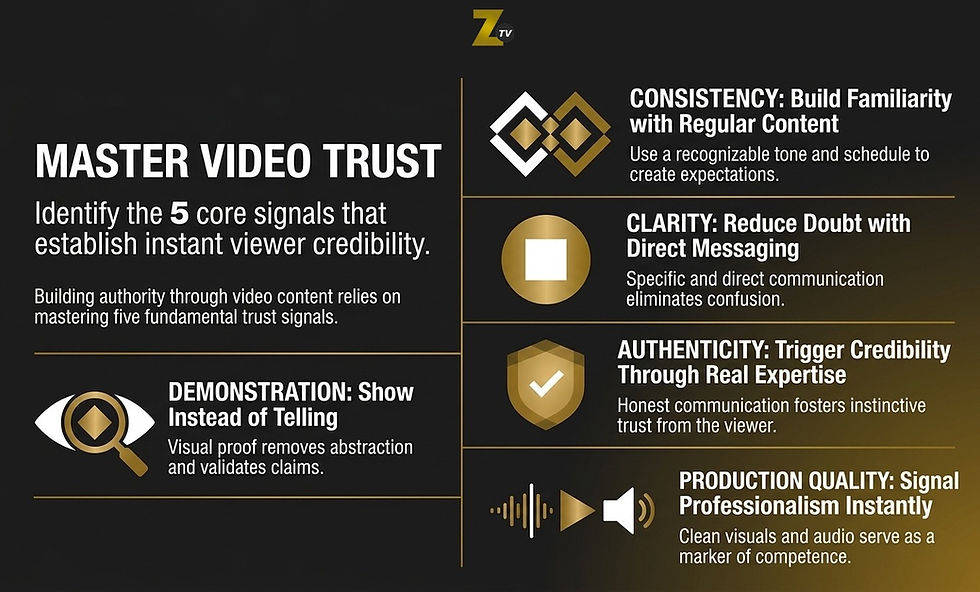
Trust through video marketing comes from a few specific things working together.
Consistency is the first one. A brand that shows up on screen regularly, with a recognizable look, tone, and message, builds familiarity. Familiarity builds comfort. Comfort lowers resistance. This is why the brands with the strongest video presence aren't necessarily producing the most elaborate content. They're producing it consistently enough that their audience knows what to expect.
Clarity is the second. The fastest way to lose someone's trust on video is to be vague about what you do and who you help. The brands that build credibility through video are specific. They talk about real problems. They use real language. They demonstrate rather than describe wherever possible.
Authenticity is the third, and it's the one people tend to overcomplicate. Authenticity in video doesn't mean unpolished or unprepared. It means the person on screen actually believes what they're saying and knows what they're talking about. Audiences are very good at detecting when someone is performing versus when someone is communicating. The difference shows up in subtle ways, such as pacing, eye contact, and the willingness to be direct, and it affects trust more than production quality does.
The Five
From Visibility to Revenue: Where Video Strategy Gets Serious
Visibility is valuable. But visibility that doesn't move people toward a decision is just entertainment. The question every brand should be asking about their video presence isn't how many views did this get. It's what someone believes about us after watching it, and did that belief move them closer to working with us?
This is the bridge between brand credibility video and actual business outcomes. If you want to understand how brands make that bridge work in practice, this guide on converting visibility into sales breaks down the mechanics clearly.
The short version is this. Video earns attention and builds initial trust. But the content of that video has to be doing deliberate positioning work. It needs to answer the questions an ideal client is carrying before they ever reach out. It needs to show the thinking behind the work, not just the results. It needs to make the viewer feel understood before it makes any kind of ask.
Brands working with a strong content creator monetization strategy understand that every video is doing one of two things: either moving someone closer to trust, or wasting the attention they've already earned. There's not much middle ground.
Why Content-Driven Brands Are Winning the Long Game
Traditional advertising interrupts. Content invites. That fundamental difference in posture is why so many brands are shifting their investment away from conventional ad placements and toward owned content that builds over time.
This shift is covered in depth in this blog on content-driven marketing and why the brands moving in that direction are seeing compounding returns that paid advertising rarely produces. The relevance here is direct. Video is the most powerful format within a content-driven strategy because it carries the most trust signals simultaneously.
A written article can establish expertise. A podcast episode can build familiarity. But video can do both of those things while also communicating presence, personality, and genuine competence in a way that no other format matches. For brands that want to be known, trusted, and chosen over time rather than just seen once and forgotten, video isn't optional. It's the strategy.
FAQs
Why does video build trust faster than other content formats?
Video activates the same instinctive trust signals people use in real-world interactions, such as facial expressions, tone of voice, eye contact, and body language. These cues are processed faster and more deeply than text, which is why audiences form stronger impressions from video content in less time.
What makes a brand credibility video actually effective?
The most effective brand credibility videos are specific, consistent, and authentically delivered. They speak directly to a real problem the audience is experiencing, demonstrate expertise rather than just claiming it, and maintain a recognizable tone and visual style across multiple pieces of content.
How often should a brand post video content to build trust?
Consistency matters more than frequency. A brand that posts one high-quality, well-positioned video per week will build more trust than one that posts daily with no clear message. The goal is to show up regularly enough that your audience knows what to expect from you.
Can small brands compete with larger ones through video?
Yes, and often more effectively. Larger brands often produce polished but impersonal video content. Smaller brands with genuine expertise and clear communication can build deeper trust precisely because they feel more direct and human. Authenticity scales regardless of budget.
What is visual branding psychology, and why does it matter?
Visual branding psychology refers to how visual elements like color, framing, lighting, and movement influence how an audience perceives a brand's credibility and professionalism. It matters because first impressions in video happen within seconds, and those impressions directly affect whether someone continues watching or moves on.


Comments