Content-Driven Marketing: Why Brands Are Shifting Away From Traditional Ads

Updated: Apr 21
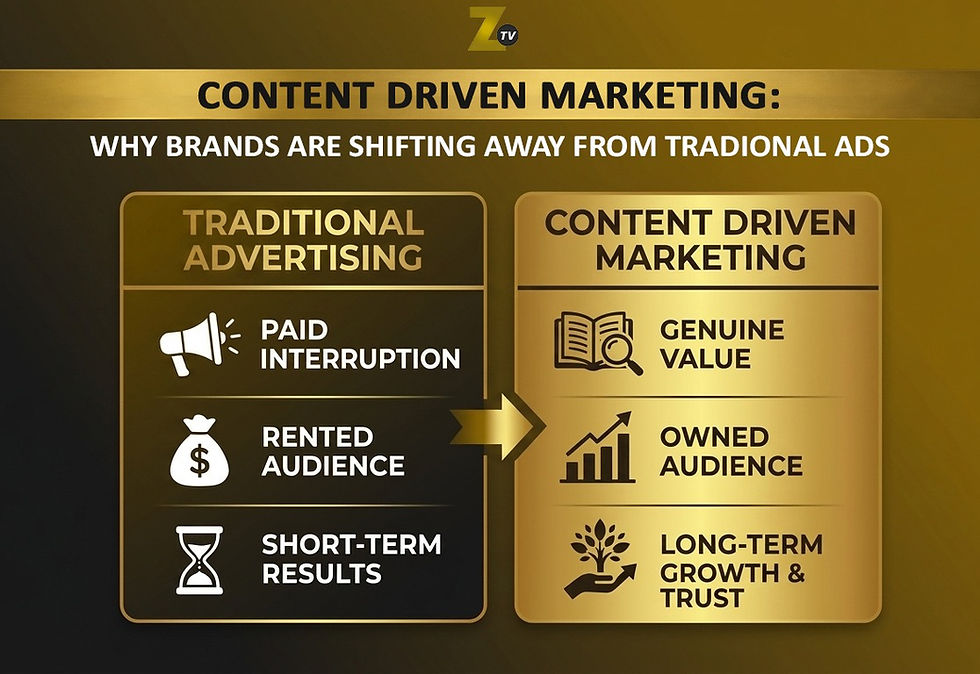
Something has changed between brands and the people they're trying to reach. It didn't happen overnight.
For most of the twentieth century, advertising ran on a simple idea: find where people are paying attention, buy access to it, and say your piece. TV, radio, print, billboards. It worked because attention was concentrated in a few places, and audiences couldn't really opt out of the messages brands paid to put in front of them.
That's not how it works anymore.
People have more control over what they see and hear than ever before. They pay for ad-free tiers. They install blockers. They skip, scroll, and swipe past promotional stuff so automatically that they barely even notice they're doing it. The infrastructure of avoidance is sophisticated, everywhere, and still getting better.
Brands that keep throwing money at the old model are seeing what the numbers have shown for years: less and less return on paid interruption, and more and more return on content that actually earns its place in someone's attention. Content-driven marketing isn't a trend. It's a response to a fundamental shift in how people behave.
This post looks at why that shift is happening, what it looks like on the ground, and how brands that do it thoughtfully are building something way more durable than any ad campaign could ever create.
What Content-Driven Marketing Actually Means
Past the Buzzword
People throw around "content-driven marketing" so loosely that it's worth getting clear on what it actually means. It's not just producing content alongside your ads. It's not writing a blog post twice a month while running the same interrupt-driven ad strategy you've always run. It's a fundamental shift in how a brand creates value for its audience before asking for anything back.
At its core, a content-driven approach means building a body of work educational, entertaining, or genuinely useful that serves what the audience actually needs. Advertising, by definition, doesn't do that. Advertising is for the brand. Good content is for the person consuming it. That difference sounds small. It changes everything about how content gets made and what it can actually do.
The shift also changes your relationship with time. Advertising produces results in proportion to what you spend, and those results stop when the spending stops. Content compounds. A well-made video, a deeply researched article, a genuinely helpful series, these keep bringing people in, building trust, and driving conversions long after you made them. The economics are completely different.
Why Traditional Ads Are Losing Their Edge
The content vs advertising debate isn't really a debate anymore in most marketing circles. The data has been consistent for so long that the question has shifted from "does content outperform traditional ads?" to "how do we actually execute a content strategy that delivers?"
A few things are killing traditional advertising's effectiveness. Ad fatigue is real and measurable. People see hundreds of brand messages a day and have developed filtering behaviors that happen below conscious awareness. Younger generations in particular grew up drowning in ads and have correspondingly strong resistance to anything that feels promotional.
Trust is the other big one. Advertising is self-interested. Everyone knows it. That built-in credibility gap means that even really well-crafted ads carry less weight than content that seems to offer real value without an obvious agenda attached.
The Brand Content Strategy That's Replacing Ad Dependency
Building an Audience Instead of Renting One
The biggest strategic difference between content-driven marketing and traditional ads is ownership. When you run ads, you rent access to someone else's audience for the length of the campaign. When the campaign ends, the access ends. No asset left behind. No accumulated equity. No ongoing return.
Content builds an audience you actually own. An email list you grew through valuable content is an asset you control. A YouTube channel with real subscribers is a distribution channel that doesn't need ongoing spend to keep working. A podcast with loyal listeners is a trust relationship that gets stronger with every episode. These are fundamentally different kinds of marketing investment, and they show up differently on your balance sheet over time.
This connects directly to what this blog on attention economy marketing points out: the brands winning right now aren't the ones with the biggest ad budgets. They're the ones that learned to create content their audience actually seeks out, not content their audience actively avoids.
What a Real Brand Content Strategy Looks Like
An effective brand content strategy starts with a clear answer to a deceptively simple question: what does our audience need to know, understand, or be able to do, and how can we help them with that better than anyone else in our space?
That question flips the creative brief from "how do we get our message across?" to "how do we serve our audience?" The resulting content is completely different. It's specific instead of general. It's useful instead of promotional. It's built around the audience's real questions instead of the brand's talking points.
Branded content marketing at this level requires real investment in the thinking behind the content, not just production quality, though that matters too. A brand that puts out genuinely useful content in a well-produced format is making a statement about its standards. That carries over into how people see your products and services.
How Organic Brand Growth Changes the Business Model
The Compounding Effect of Content
Organic brand growth through content runs on a timeline that makes traditional marketers uncomfortable at first. A single piece of content almost never produces immediate, measurable returns. But a body of content, built consistently over twelve to twenty-four months, produces something that paid advertising structurally cannot: compounding organic reach.
SEO is part of it, but not the whole story. Content that genuinely serves its audience gets shared, referenced, quoted, and linked to. It catches the attention of journalists, podcast hosts, and other creators who amplify it further. It builds the kind of authority that makes your brand the first name people think of in a specific context. None of those effects is for sale. You earn them slowly, and then all at once.
This guide on converting visibility into sales digs into how organic visibility specifically turns into revenue, making the case that the path from content to awareness to trust to purchase is more reliable and more scalable than the awareness you get from paid placement.
Video as the Centerpiece of Content Strategy
If there's one format that has proven most effective at building the kind of trust that drives organic growth, it's video. Voice, face, movement, story, these activate cognitive and emotional engagement at a level that text and static images rarely reach. People form genuine parasocial relationships with the people and brands that show up consistently on screen.
Video marketing services that understand this dynamic produce content designed not just to inform but to build that relationship over time. The goal isn't one impressive production. It's a consistent presence that people come back to because they actually find it valuable.
If you're thinking about investing in content creator monetization, the right comparison isn't production cost versus the reach of one video. It's production cost versus the cumulative return of a content library that keeps generating discovery, trust, and conversions for years after you made it.
Where Traditional Advertising Still Has a Place
Paid and Organic Working Together
Shifting toward content-driven marketing doesn't mean ditching paid ads entirely. The smartest approaches use them together, with a clear sense of what each one does well.
Paid ads are good for amplifying content that's already proven to resonate, reaching new people who haven't discovered your organic presence yet, and time-sensitive promotions where immediate reach matters. TV commercial production and broadcast placements still have value for building broad awareness quickly, especially when the creative quality is high enough to actually hold attention in a crowded environment.
What changes in a content-driven model is the role ads play. They become an amplifier for your content instead of a replacement for it. Your owned content ecosystem does the heavy lifting on trust and authority. Paid placements extend reach to people who will then find that ecosystem and develop the kind of relationship with your brand that ads alone can't build.
OTT platform providers have become increasingly important in this hybrid model because they offer the credibility and attention quality of broadcast media with the targeting precision of digital media. You can reach specific, qualified audiences in a high-engagement viewing environment while pointing them toward content ecosystems designed to deepen the relationship over time.
Content vs Advertising: A Strategic Comparison

The table isn't saying traditional advertising is worthless. It's saying a strategy that depends entirely on it is getting more fragile by the year, and that content-driven marketing builds the kind of durable equity that ad spend alone never accumulates.
FAQs
What is content-driven marketing, and how is it different from traditional ads?
Content-driven marketing is when brands create genuinely useful, educational, or entertaining material that serves what their audience actually needs, instead of just pushing products. Traditional advertising interrupts people with brand messages. Content marketing earns attention by offering something valuable. The key difference is the relationship: ads are promotional, good content is audience-serving. That shift builds stronger, more durable trust over time.
Why are brands moving away from traditional advertising?
Because it's working less and less. Ad fatigue, ad blockers, audience skepticism, and people getting really good at tuning out promotional stuff are all taking their toll. Meanwhile, content-driven approaches are showing real advantages in audience trust, organic reach, and long-term return on investment. The economics are also better: content compounds over time instead of stopping the second you stop spending.
How long does content-driven marketing take to show results?
Usually, six to twelve months of consistent work before you see meaningful results, with compounding returns getting stronger over eighteen to twenty-four months. Unlike ads, which give you returns in proportion to what you spend and stop when you stop, content builds organic reach and authority gradually. It takes patience. But a well-developed content library keeps paying you back long after you made it.
What types of content work best for organic brand growth?
The stuff that directly answers your audience's specific questions, challenges, and interests. Video consistently outperforms other formats for trust and relationship building. Long-form written content works well for search discovery and authority. Podcasts build deep loyalty among consistent listeners. The best strategies usually combine formats to reach people across different contexts and preferences.
Can small brands compete with big advertisers using content marketing?
Yes, and content-driven marketing is one of the few places where smaller brands can genuinely beat bigger ones. Big ad budgets give you an edge in paid placement, but they don't buy you better thinking, more relevant content, or more authentic audience relationships. A small brand with a clear point of view, real expertise, and consistent content output can build more trust and stronger audience relationships than a large brand just throwing money at media spend. The real barrier to entry is creative quality, not budget.


Comments