Video Content Strategy: Build a Branded Video Plan For Results.

Updated: Apr 15
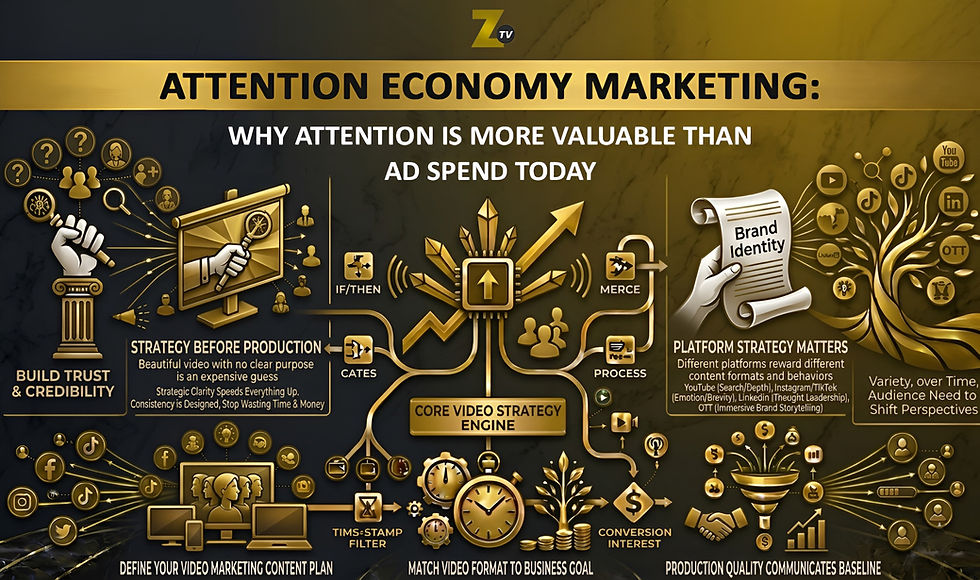
Most businesses that struggle with video have the same problem. It's not that they lack ideas, budget, or even talent. It's that they're making stuff without a strategy underneath it. A beautiful video that has no clear purpose, no defined audience, and no plan for where it lives after it's made is basically just an expensive guess.
The businesses winning with video right now aren't the ones with the biggest production budgets. They're the ones who figured out why they're making each piece of content, who it's for, where it goes, and how it connects to the next thing. That clarity is what separates a real video strategy from a random list of video ideas. And the difference in results is massive.
This blog breaks down how businesses actually build video strategies that work, what decisions matter most at each stage, and how to create a system that gets more valuable over time instead of needing to be reinvented every month.
Why Strategy Has to Come Before Production
There's a natural pull toward just jumping in and making things. It feels productive. Grab a camera, come up with a concept, spend a few hours editing, and now something exists. The problem is that without strategic clarity, all that effort rarely adds up to anything coherent.
A real video strategy answers the questions that production can't. Who are we actually talking to, and what do they care about? What should someone do after watching? Which platforms actually reach the right people? How does this video fit into the bigger story the brand is telling? What does success look like beyond just view counts?
These questions might feel like they slow things down. In reality, answering them speeds everything up because they stop you from wasting time and money on directions that won't work.
The other reason strategy matters first is consistency. The brands that actually build real audiences through video do it because their content creator monetization has a recognizable point of view, a consistent tone, and a clear sense of who it's speaking to. That doesn't happen by accident. You have to design it.
Defining Your Video Marketing Content Plan
A video marketing content plan is where strategy turns into action. It takes the bigger decisions about audience, purpose, and platform and turns them into a manageable schedule of specific content.
The most useful plans are built around content pillars: two to four recurring themes that sit at the intersection of what the brand knows and what the audience actually wants. For a wellness brand, that might be education, product stories, and community. For a service business, it might be demonstrations, client results, and behind-the-scenes processes. For a media company, it might be commentary, interviews, and original programming.
Working with content pillars does two good things. It gives the creative process a structure that speeds up coming up with ideas, because you're not starting from a blank page every time. And it gives the audience a reason to come back, because they know what kind of value to expect and when.
From those pillars, a practical plan maps out what gets made, in what format, at what pace, on which platform. That map doesn't need to be complicated. A simple quarterly plan with monthly themes and weekly content types is plenty for most businesses building their video presence from the ground up.
Platform Strategy: Where Your Video Lives Matters
One of the biggest decisions in any video strategy is choosing where to put your content. And it's something a lot of businesses get wrong by trying to be everywhere at once.
Different platforms do different things. YouTube works like a search engine and rewards depth, consistency, and watch time. Instagram and TikTok reward brevity, emotion, and shareability. LinkedIn favors professional insight and thought leadership. Connected TV and streaming environments through OTT platform providers reach people in leanback viewing mode, which allows for longer, more immersive brand storytelling.
The smartest move for most businesses is to pick one or two primary platforms where their audience actually spends time, build a consistent presence there first, and then expand distribution as the content library grows. One well-executed YouTube channel or a consistent Instagram presence will beat a scattered presence across six platforms every single time.
That said, repurposing is real and powerful. A long-form video made for YouTube can become five short clips for Instagram, a highlight for LinkedIn, a thumbnail and quote graphic for email, and a transcript-based blog post. The key is producing source content at a quality level that holds up across formats, which is where working with professional corporate video production services pays for itself.
The Role of Storytelling in Business Video Strategy
Data persuades. Stories move people. The businesses that build lasting relationships through video understand that difference and lean into storytelling even when it would be easier to just rattle off information.
Every effective brand video, whether it's a thirty-second social clip or a ten-minute documentary, has a story arc at its core. There's a character the viewer can relate to, a tension or problem that creates momentum, and a resolution that delivers both emotional and informational payoff. That structure works whether the video is a client testimonial, a product demo, a brand origin story, or a tutorial.
This doesn't mean every video needs a full script and a crew. Some of the most effective brand videos are raw, direct, and just well-framed. What they share with polished productions is intentionality. Someone made a deliberate choice about what story was being told and why it would matter to the person watching.
For a grounded perspective on why video works the way it does before building a strategy around it, this blog on video marketing benefits covers the basic mechanics of why video outperforms other formats for trust, conversion, and retention.
Matching Video Format to Business Goal

Not all video formats serve the same purpose. A smart business video strategy uses different formats intentionally, depending on where the viewer is in their relationship with the brand.
The mistake most businesses make is using awareness-stage formats for conversion goals, or making conversion content and putting it where awareness-stage audiences hang out. Matching the format and the platform to the actual goal closes a gap that causes a lot of otherwise decent videos to underperform.
Production Quality and What It Actually
Communicates
There's a persistent myth that production quality doesn't matter anymore, that authenticity beats polish, and audiences prefer raw, shaky content. The real story is more nuanced.
Authenticity matters a lot. But authenticity is about genuine perspective and honest communication, not bad lighting and bad audio. Poor sound, inconsistent lighting, and sloppy editing don't make a brand feel more human. They make it feel unprepared. Audiences will forgive imperfection in genuine moments, but they expect a baseline of quality from brands they're supposed to take seriously.
The question isn't whether to invest in quality. It's where that investment matters most. For content living on a brand's website, in paid ads, or on broadcast and streaming platforms, professional production isn't optional. For organic social content meant to feel immediate and personal, a lighter touch is often more appropriate and more effective.
Working with a professional media production company lets brands establish that high-quality baseline for flagship content while freeing up internal resources for the more frequent, lighter social content that keeps audiences engaged between major productions. The combination of both planned and produced as part of a coherent strategy is what a mature video strategy looks like in practice.
Measuring What Actually Matters
View counts feel like success. They're rarely the whole story.
The metrics that actually tell you whether a video strategy is working depend entirely on the goal of the content. For awareness stage content, reach, impressions, and share rate tell you whether you're finding new audiences. For educational content, watch time and return viewer rate tell you whether people are genuinely engaging. For conversion-stage content, clickthrough rate, landing page visits, and actual sales are the numbers that matter.
Building a measurement framework before launching content means you have a clear standard for success before you get emotionally attached to the results. It also makes iteration much faster. When you know exactly what you're measuring, underperformance tells you something specific instead of just feeling bad.
Building a Video Strategy That Compounds Over Time
The most important thing to understand about a video content strategy is that the value compounds. A library of fifty well-produced, strategically distributed videos isn't just fifty times more valuable than one video. It's exponentially more valuable because it creates multiple entry points into the brand, builds searchable and shareable assets, and signals to every platform algorithm that this is a consistent, credible source of content worth surfacing.
That compounding only happens through consistency. And consistency only happens when the strategy is realistic enough to actually sustain. An ambitious plan that burns out in three months delivers less long-term value than a modest plan executed reliably over two years.
We work with brands that are serious about building video as a long-term strategic asset rather than a one-off campaign. The difference between brands that win with video and those that don't usually comes down to whether someone made a real plan and stuck to it, and whether they had the right creative and strategic partner to help them do that well.
FAQs
What does a company require a video content strategy for?
A video content strategy tells you why you're making videos, who they're for, what formats and platforms you'll use, how you'll make and share them, and how you'll know if they're successful. Without one, video production is reactive, unstable, and impossible to develop. One provides each piece of content a purpose and makes the brand more valuable over time.
How do you develop a video content strategy from scratch?
Find out what your audience cares about and who they are. Pick two to four main topics that bring together what you know and what they require. Pick one or two platforms based on where your audience hangs out. Set a pace for making things that will last. Before you make any content, decide what success looks like for each type. Use data to review the plan every three months.
How often should companies put up videos?
Consistency is more crucial than frequency. One well-placed video each week will do better than three weeks of daily posts followed by a month of silence. The best cadence is what you can keep up with your resources. Most small to medium-sized businesses should start by posting one to three films a week on different platforms.
Which kinds of videos do B2B companies like best?
Thought leadership interviews, explainer films, case studies, and behind-the-scenes process details answer the specific questions that company buyers have and help them trust you. Webinar recordings turned into on-demand videos are great for B2B audiences that need more time to make a decision.
How can you know whether your video content strategy is working?
Don't use the same number for everything; instead, match measurements to goals. The reach and share of awareness material are used to measure it. Educational information based on how long you watch and how often you come back. CTR and sales show how well conversion material works. Keep an eye on the total view duration, audience size, and leads or sales made by videos at the strategy level. That shows if the plan is making things better.


Comments